
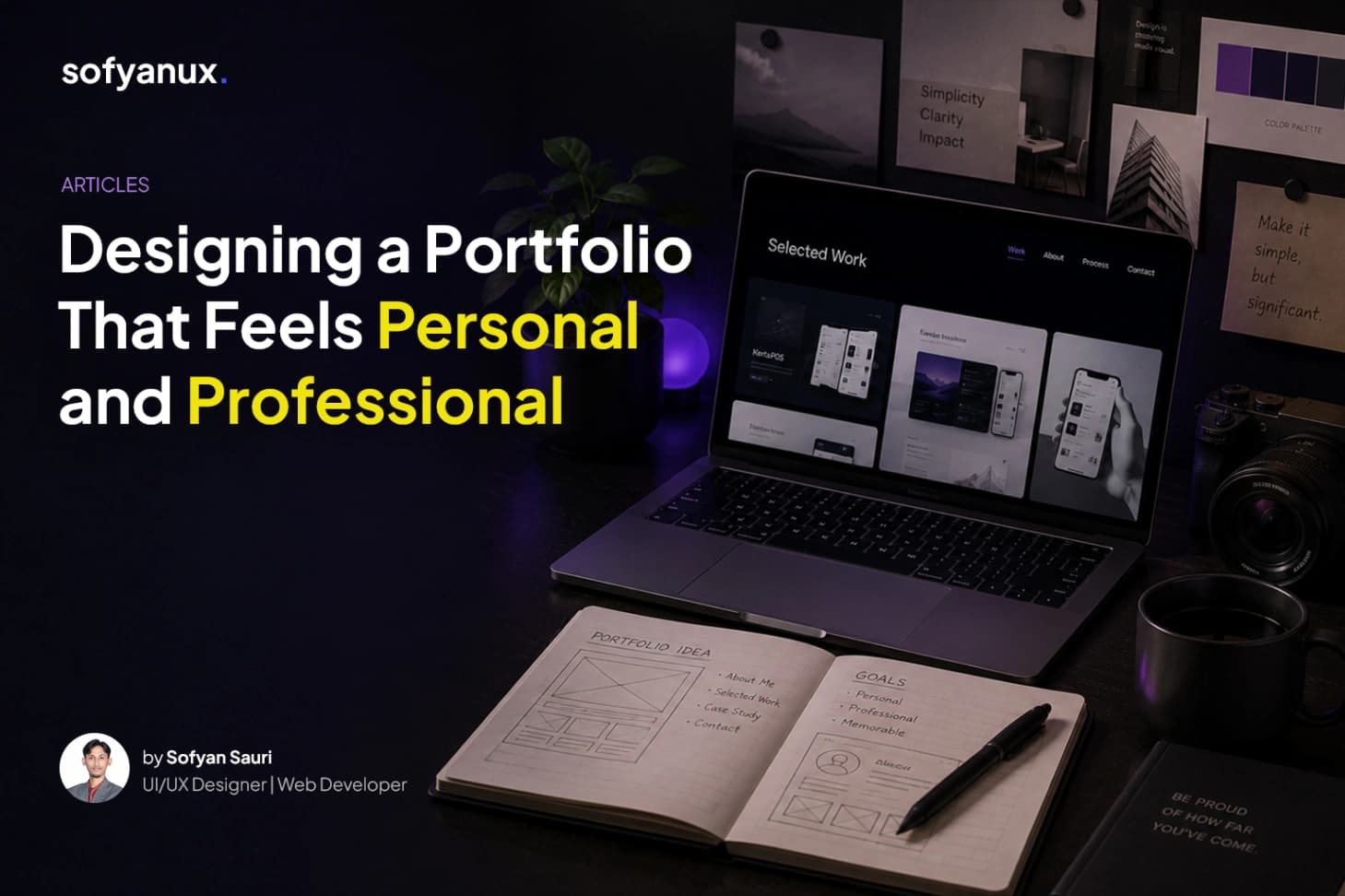
# Designing a Portfolio That Feels Personal and Professional
A personal portfolio is more than a place to display work. It is a digital space that represents who you are, how you think, and what kind of work you can create.
For designers, developers, and creative professionals, a portfolio should do more than look attractive. It should help people understand your capability, your process, and your value.
## A portfolio should have a clear point of view
Many portfolios feel similar because they only focus on showing project thumbnails.
While visuals are important, a strong portfolio needs a clear point of view.
It should answer questions like what kind of work you do, what problems you can solve, what type of projects you are suitable for, and how you approach your work.
When those answers are clear, the portfolio becomes easier to understand.
## Balance personality and professionalism
A portfolio should feel personal, but not random.
It should show your taste, tone, and personality while still being structured and professional.
This balance can come from typography, writing style, layout, selected projects, and even small details like microcopy or section titles.
## Case studies create depth
Project cards are useful, but case studies create depth.
A good case study explains the problem, the goal, the process, the solution, and the result. It helps visitors understand not only what you made, but also why you made it.
## Final thoughts
A strong portfolio is not only about showing work.
It is about building trust.
It should communicate your skills, your process, and your personality in a way that feels clear, professional, and memorable.

# Designing a Portfolio That Feels Personal and Professional
A personal portfolio is more than a place to display work. It is a digital space that represents who you are, how you think, and what kind of work you can create.
For designers, developers, and creative professionals, a portfolio should do more than look attractive. It should help people understand your capability, your process, and your value.
## A portfolio should have a clear point of view
Many portfolios feel similar because they only focus on showing project thumbnails.
While visuals are important, a strong portfolio needs a clear point of view.
It should answer questions like what kind of work you do, what problems you can solve, what type of projects you are suitable for, and how you approach your work.
When those answers are clear, the portfolio becomes easier to understand.
## Balance personality and professionalism
A portfolio should feel personal, but not random.
It should show your taste, tone, and personality while still being structured and professional.
This balance can come from typography, writing style, layout, selected projects, and even small details like microcopy or section titles.
## Case studies create depth
Project cards are useful, but case studies create depth.
A good case study explains the problem, the goal, the process, the solution, and the result. It helps visitors understand not only what you made, but also why you made it.
## Final thoughts
A strong portfolio is not only about showing work.
It is about building trust.
It should communicate your skills, your process, and your personality in a way that feels clear, professional, and memorable.

